
- OKE Products
- limoss Products
- Lining Types
- Mechanisms and Connectors
- Elastic Webbings
- Fiber Types
- Zigzag Springs and Equipment
- Tufting Tapes/Threads
- Staple Types
- Capsule Buttons and Machines
- Capsule Machines
- Upholstered Capsule Button Nailing Gun
- Capsule Button Upholstery TEB-2 Hand Press
- Capsule Button Manual Cutting and Upholstery Table Set
- Capsule Button Pneumatic Cutting and Upholstery Table Set
- Capsule Button Semi-Automatic Cutting and Upholstery Table Set
- Capsule Button Full Pneumatic Cutting and Upholstery Table Set
- Capsules
- Capsule Machines
- Cleaning and Clothing Spray
- Adhesives
- Various Materials
- Plastic Legs
- Plastic Handles


Choosing the Right Upholstery Material for Furniture Projects: 5 Key Professional Steps

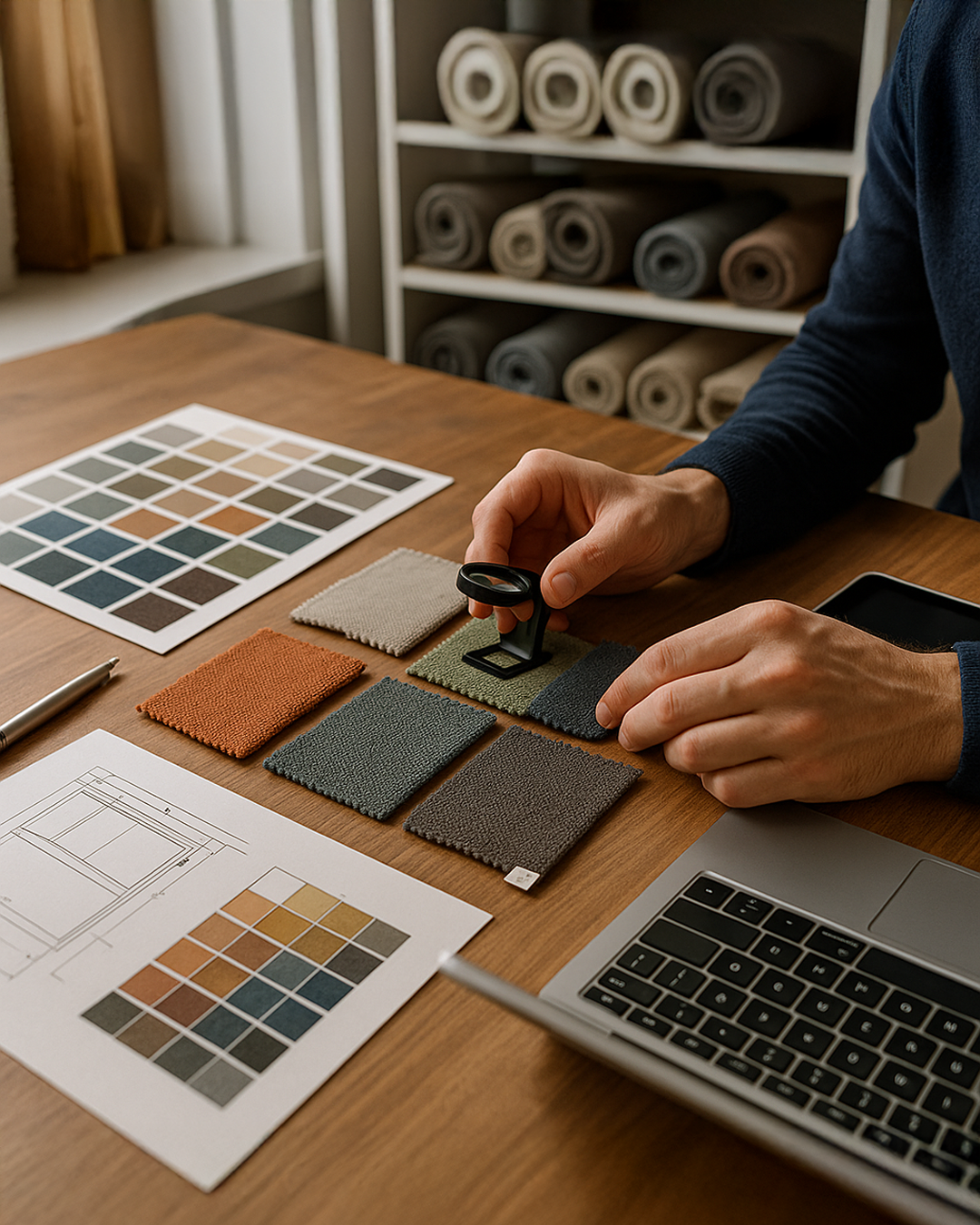
Selecting the right upholstery material in furniture projects directly impacts both the aesthetic and functional success of the project. Wrong choices not only increase costs but can also shorten the product’s lifespan and reduce customer satisfaction. A professional approach makes the fabric selection process more efficient, informed, and a long-term investment.
Below are five essential steps professionals follow when choosing the right upholstery materials for furniture projects.
1. Analyze the Intended Use and Space Characteristics
Every space has different requirements. Expectations for a chair in a hotel lobby differ from those for a residential living room.
- For high-traffic commercial areas, choose fabrics with high abrasion resistance.
- In humid environments, coatings that prevent mold and mildew are essential.
- For outdoor furniture, select fabrics resistant to UV rays and water-repellent properties.
Tip: Consider lighting conditions, temperature fluctuations, and user profiles, as these factors also influence fabric choice.
2. Review Durability Standards and Test Results
Durability criteria cannot be overlooked in professional selection. Martindale or Wyzenbeek test results are standard measures of fabric abrasion resistance.
- Fire resistance: Ensure compliance with local fire safety standards, especially in public spaces.
- Stain resistance: Easy-to-clean fabrics reduce maintenance costs in high-use areas.
- Color fastness: Fabrics must retain their color when exposed to sunlight over time.
Tip: Certified products provide additional assurance of quality and safety.
3. Consider Aesthetic Harmony and Design Language
Each project has a unique design language, and fabric choice should preserve its integrity.
- The color palette should complement wall, floor, and accessory colors.
- Texture selection should emphasize the furniture form and add depth to the space.
- Patterns can be minimal or bold, depending on the concept of the space.
Tip: While trendy colors may be attractive, timeless tones are preferable for long-lasting projects.
4. Verify Material Source and Supply Chain
Supplier reliability plays a critical role in choosing the right upholstery material.
- Working with certified manufacturers ensures quality standards are maintained.
- A transparent supply chain demonstrates that materials are produced ethically and sustainably.
- Availability of spare fabric and delivery times is important for future maintenance and repairs.
Tip: Confirming supplier stock levels and delivery schedules helps ensure adherence to project timelines.
5. Balance Budget, Cost-Performance, and Long-Term Investment
The most expensive material is not always the best choice. The key is to balance budget and quality.
- Total cost of ownership (TCO) includes not only purchase price but also maintenance, repairs, and potential replacement costs.
- Durable materials may have higher initial costs but offer long-term savings.
- For large-scale projects, negotiate prices with suppliers for bulk purchases.
Tip: Cost planning should prioritize both aesthetic appeal and technical performance.
Common Mistakes in Professional Fabric Selection
- Focusing only on appearance while ignoring technical specifications.
- Choosing materials unsuitable for the intended use.
- Failing to clarify delivery dates during the procurement process.
- Neglecting to review test reports and certifications.
Conclusion
Selecting the right upholstery material is one of the most critical steps in furniture project management. A professional selection approach integrates intended use, durability standards, aesthetic harmony, reliable sourcing, and cost-performance balance.
By following these five steps, you can create furniture projects that are not only visually impressive but also functional, durable, and long-lasting.