
- OKE Products
- limoss Products
- Lining Types
- Mechanisms and Connectors
- Elastic Webbings
- Fiber Types
- Zigzag Springs and Equipment
- Tufting Tapes/Threads
- Staple Types
- Capsule Buttons and Machines
- Capsule Machines
- Upholstered Capsule Button Nailing Gun
- Capsule Button Upholstery TEB-2 Hand Press
- Capsule Button Manual Cutting and Upholstery Table Set
- Capsule Button Pneumatic Cutting and Upholstery Table Set
- Capsule Button Semi-Automatic Cutting and Upholstery Table Set
- Capsule Button Full Pneumatic Cutting and Upholstery Table Set
- Capsules
- Capsule Machines
- Cleaning and Clothing Spray
- Adhesives
- Various Materials
- Plastic Legs
- Plastic Handles


Sustainable Upholstery in the Furniture Industry: Trends and Best Practices

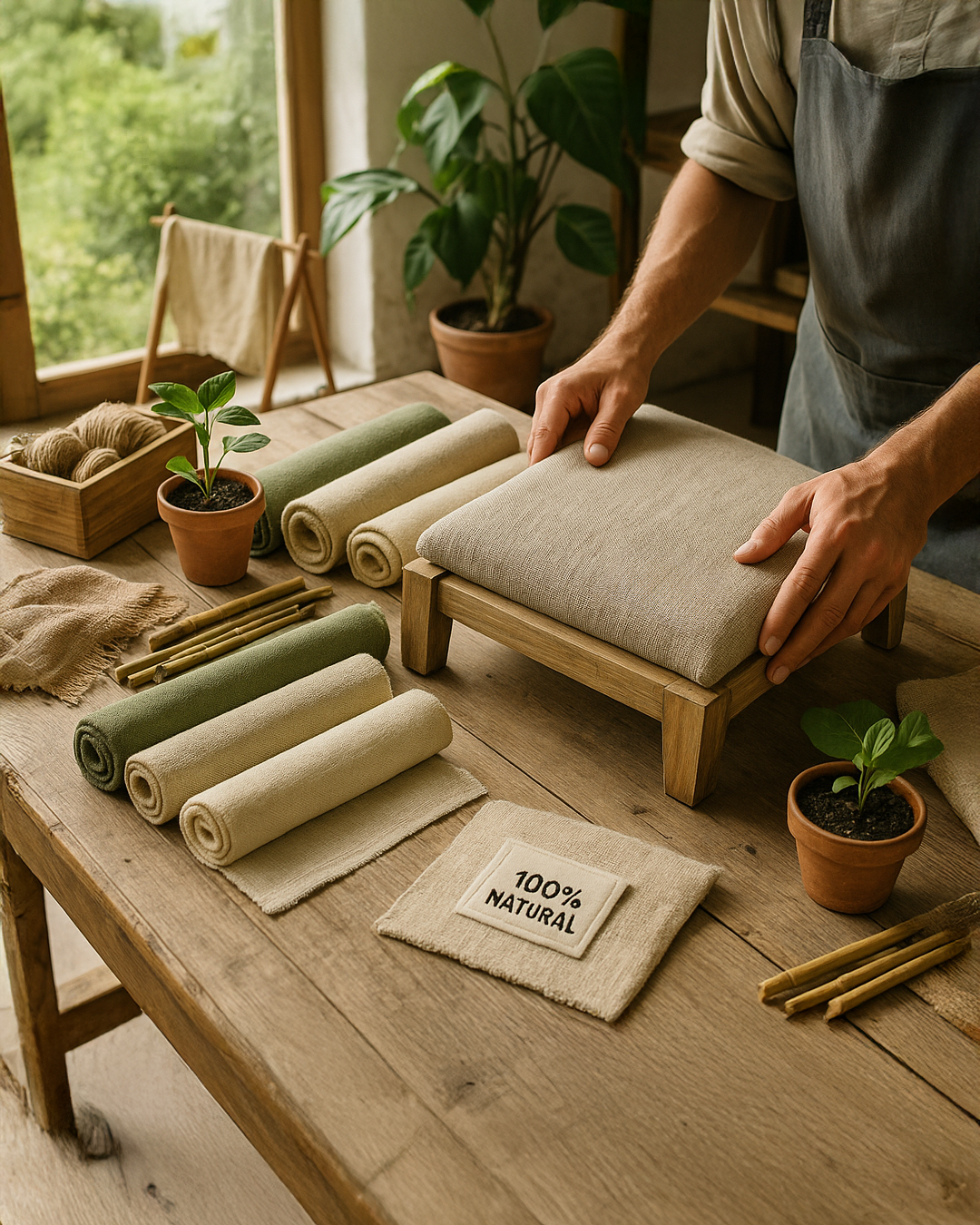
Today, sustainable furniture production is not only an environmental responsibility but also a key way for brands to gain a competitive advantage. Consumers value not only aesthetic design but also whether the production process uses eco-friendly upholstery and sustainable materials.
As a result, manufacturers are placing solutions such as recycled fabrics and coverings made from natural fibers at the center of their production chains. In this article, we will explore how environmentally conscious production practices are reflected in furniture upholstery materials.
The Foundation of Sustainable Furniture
Sustainable furniture refers to products that minimize environmental impact throughout their lifecycle, from production to end-of-life, and are suitable for recycling or reuse.
Green manufacturing principles include:
- Reducing resource consumption
- Using renewable energy
- Avoiding toxic chemicals
- Implementing effective waste management
Advantages of Eco-Friendly Upholstery Materials
- Reduces Carbon Footprint
Materials like recycled polyester or cotton significantly lower energy and water consumption during raw material production. - Safer for Human Health
Natural fibers and low-VOC (Volatile Organic Compounds) coatings improve indoor air quality. - Durability and Longevity
High-quality eco-materials are as durable as traditional materials and reduce maintenance costs.
Popular Eco-Friendly Upholstery Options
Recycled Polyester Fabrics
- Made from used PET bottles.
- High durability and color fastness.
- Widely used in commercial furniture and office projects.
Organic Cotton and Linen
- Produced without chemical fertilizers or pesticides.
- Breathable and provides a natural aesthetic.
Tencel™ and Bamboo Fibers
- Sourced from renewable resources.
- Soft texture and moisture-regulating properties enhance comfort.
Natural Leather with Vegetable Tanning
- Uses plant-based tannins instead of chemical processes.
- Consumes less water and energy.
Considerations in Green Production Processes
- Work with Certified Suppliers
Collaborating with suppliers certified by GOTS (Global Organic Textile Standard), OEKO-TEX®, or Cradle to Cradle ensures materials are genuinely eco-friendly. - Waste Management
Fabric scraps generated during production should be separated for recycling or reuse. - Energy Efficiency
Use LED lighting, energy recovery systems, and renewable energy sources in production facilities.
2025 Trends in Eco-Friendly Upholstery
- Modular furniture systems allow fabrics to be replaced easily, extending furniture lifespan.
- Bio-based coverings have significantly lower carbon emissions compared to petroleum-based alternatives.
- Color trends draw inspiration from nature: earthy tones, soft greens, and neutral beiges.
Eco-Friendly Upholstery in Commercial Projects
Hotels, airports, restaurants, and offices are increasingly choosing sustainable furniture in line with corporate social responsibility policies.
This approach reinforces the brand’s environmental awareness while providing users with healthy, aesthetically pleasing, and comfortable spaces.
Conclusion
Eco-friendly upholstery solutions are critical not only for the planet but also for the long-term success of businesses.
Recycled fabrics, sustainable materials, and green manufacturing principles are setting new standards in the furniture industry for both quality and environmental responsibility.
In the future, sustainability will not be a choice but a fundamental requirement in the furniture sector. Brands that adapt to this transformation today will gain a competitive edge tomorrow.