
- OKE Products
- Lining Types
- Mechanisms and Connectors
- Elastic Webbings
- Fiber Types
- Zigzag Springs and Equipment
- Tufting Tapes/Threads
- Staple Types
- Capsule Buttons and Machines
- Capsule Machines
- Upholstered Capsule Button Nailing Gun
- Capsule Button Upholstery TEB-2 Hand Press
- Capsule Button Manual Cutting and Upholstery Table Set
- Capsule Button Pneumatic Cutting and Upholstery Table Set
- Capsule Button Semi-Automatic Cutting and Upholstery Table Set
- Capsule Button Full Pneumatic Cutting and Upholstery Table Set
- Capsules
- Capsule Machines
- Cleaning and Clothing Spray
- Adhesives
- Various Materials
- Plastic Legs
- Plastic Handles


Top 2025 Trends in Upholstery Fabrics

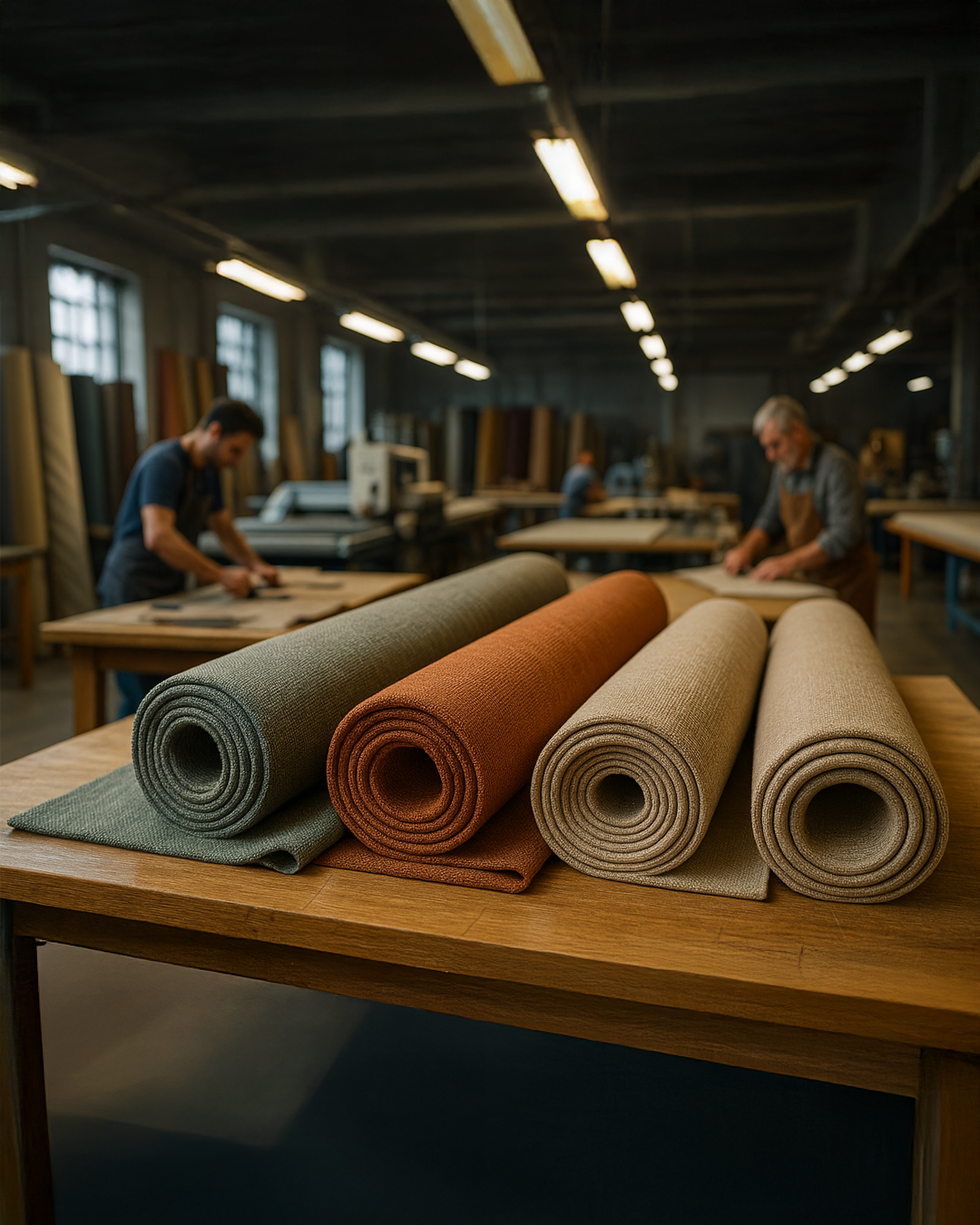
1. Rise of Sustainable and Eco-Friendly Materials
Among the 2025 trends, eco-friendly production and recyclable materials are gaining the strongest momentum. Upholstery fabrics are now evaluated not only for aesthetics but also for their environmental impact.
- Organic and natural fibers: Linen, bamboo, hemp, and wool are regaining popularity. These materials stand out for their breathability and low carbon footprint.
- Recycled fabrics: Textile waste is being reprocessed for furniture applications, offering both cost advantages and improved waste management.
- Low chemical content: Fabrics with low formaldehyde and VOC (volatile organic compounds) levels provide health-friendly options for both manufacturers and end users.
2. Increased Variety in Texture and Surface
Upholstery trends in 2025 are shaped not only by colors but also by textures. Users increasingly demand multi-dimensional, tactile surfaces.
- Bouclé fabrics: Following their rise in 2024, these fabrics remain a top trend in 2025, valued for their soft texture and warm appearance.
- Velvet and suede: These luxurious fabrics are becoming more functional with new production techniques that enhance durability and ease of maintenance.
- Hybrid textures: Combining different yarn types and weaving techniques in a single surface adds both visual and physical depth to designs.
3. Balanced and Natural Color Palettes
2025 color trends emphasize a balance between natural tones and bold accent colors.
- Natural and earth tones: Olive green, beige, sand, and warm browns paired with natural fibers bring calm and serenity to spaces.
- Vibrant accent colors: Deep petrol blue, burnt orange, and mustard yellow add dynamism to monochromatic designs.
- Gradients and ombré effects: Fabrics featuring smooth transitions between colors are increasingly preferred, particularly in modern and contemporary furniture.
4. Enhanced Functionality Through Innovative Production Techniques
Technology is influencing not just production speed but also product performance. In 2025, innovative manufacturing methods enhance both the longevity and functionality of upholstery fabrics.
- Nano-coating technologies: Water, stain, and dirt-resistant nano coatings are now applied in more durable and eco-friendly formulations.
- Heat-shaping fabrics: Upholstery materials that take shape post-assembly are becoming common in modular furniture.
- 3D knitting techniques: Provide lightweight yet durable fabrics with improved airflow.
- Digital printing technologies: Allow highly detailed, personalized patterns beyond traditional designs.
5. Modularity and Replaceable Upholstery
2025 trends are moving toward easily replaceable covers and panel systems.
- Users can refresh upholstery surfaces instead of replacing entire furniture pieces to keep up with trends.
- Manufacturers offer easy-to-install and remove systems, providing both eco-friendly and cost-effective solutions.
6. Acoustic and Comfort-Focused Materials
Noise control has become an important comfort factor in modern living spaces. Consequently, sound-absorbing upholstery materials are gaining prominence in 2025.
- Fabrics integrated with acoustic panels: Increasingly used in offices, hotels, and public spaces.
- Extra-padded fabrics: Enhance seating comfort while improving sound absorption.
Conclusion
2025 will mark a year of significant aesthetic and functional innovation in upholstery fabrics. Sustainability, texture variety, balanced color palettes, and innovative production techniques are leading trends. Companies aiming for a competitive edge must closely follow developments in these areas.
In both individual and large-scale commercial projects, selecting the right materials determines not only design success but also long-term user satisfaction. Upholstery trends are now defined not only by visual appeal but also by performance and environmental responsibility.